Follow the link for new editions of the Airworthiness Department forms
We inform you that the call to the number for the payment of Republic administrative fees has been changed - you can view the form with the changes at линк
Owner/user or the operater of unmanned aircraft shall submit, as parties in the administrative procedure, request for approval of unmanned aircraft directly or through authorized respresentative
Management boards of the Civil Aviation Directorate of the Republic of Serbia and Airport Nikola Tesla respectively has paid today the official visit to Ponikve Aerodrome in Uzice in order to make donations in airport equipment.
The Civil Aviation Directorate of the Republic of Serbia has allocated 8.81 million dinars, with the aim of raising the safety levels at this aerodrome, using it for testing the runway payload, for developing the project documentation for the main railings project, radio links, as well as implementing staff training.
Belgrade airport donated a motor vehicle Caddy Furgon with the aim of improving the operation, safety and security of this aerodrome, along with 10 hand-held radio stations, three mobile UHF radios, and two towers.
On this occasion, Ms Mirjana Cizmarov, the Director of Civil Aviation Directorate of the Republic of Serbia, said:
"Pursuant to the provisions of the Air Transport Act, the Civil Aviation Directorate of the Republic of Serbia, has allocated the above mentioned funds made available through passenger and cargo carriage fees and charges, originally intended to raise the level of safety in civil aviation.
Directorate will announce annual grant competition in 2015, for all aviation entities in the Republic of Serbia that will be able to submit their projects aiming to contribute to greater safety levels".
During the visit, Mr Sasa Vlaisavljević, acting Director General of Belgrade Nikola Tesla Airport made the following statement:
"Nikola Tesla airport managed to break every record last year in almost every segment of its operations, while the continuing trend in air traffic growth demonstrates its first outcomes in 2015. I am glad to have the opportunity and ability to help our peers at all Serbian aerodromes. Cooperation with Uzice Ponikve aerodrome, dating from December last year, has continued to date by donating the relevant equipment. We also seek to continue cooperation with even more effort and intensity at all levels".
The next week, training for aircraft marshalling will begin at the Airport Nikola Tesla for the employees from Ponikve aerodrome. Belgrade airport is to donate to Ponikve aerodrome the used perimeter railing with a total length of 7,000 meters.
Management boards of the Civil Aviation Directorate of the Republic of Serbia and Airport Nikola Tesla respectively has paid today the official visit to Ponikve Aerodrome in Uzice in order to make donations in airport equipment.
The Civil Aviation Directorate of the Republic of Serbia hereby informs the public that the Order on Airport Opening Hours for Air Traffic has been issued in accordance with Article 103 of the Air Transport Law, as part of the regular procedure conducted prior to the commencement of each summer and winter traffic seasons.
The Order enters into force on October 25, 2026, in alignment with the commencement of the winter traffic season in international air transport, which, according to the internationally harmonized seasonal calendar, begins on the last Sunday in October and lasts until the last Saturday in March of the following year.
The issuance of this Order represents a regular activity of the Directorate, carried out in compliance with the law and the internationally coordinated air traffic schedule.
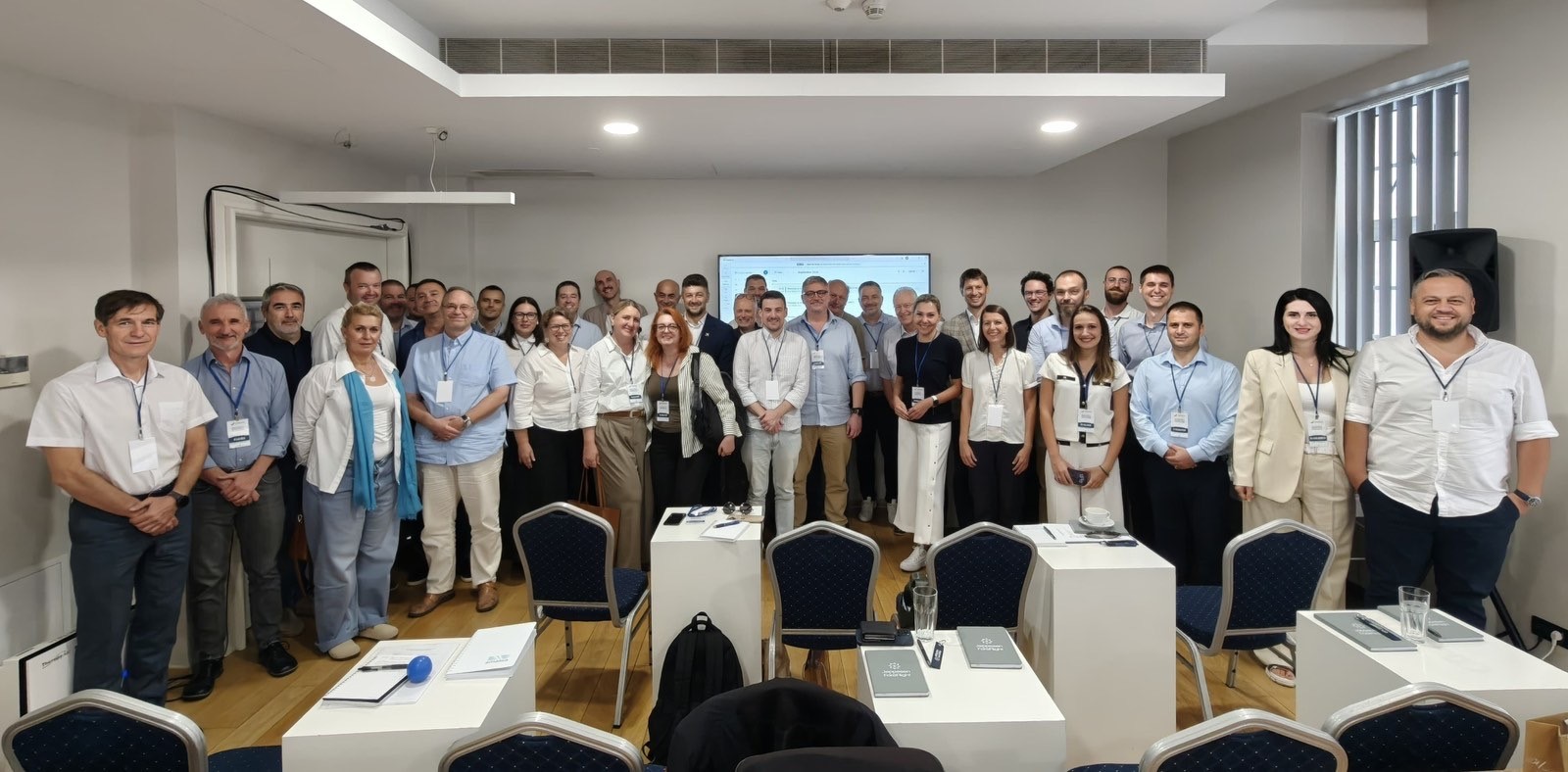
А two-day international workshop dedicated to aeronautical charts and flight procedure design commenced in Belgrade on September 10, organized by the Civil Aviation Directorate of the Republic of Serbia, with the support of the ICAO EUR/NAT Regional Office, Jeppesen ForeFlight, and Lufthansa Systems FlightNav AG.
The workshop gathered approximately 40 participants – experts specializing in aeronautical chart and flight procedure design, ensuring their adaptation to end-user requirements, as well as representatives from civil aviation authorities and aviation stakeholders from Montenegro, Bosnia and Herzegovina, North Macedonia, Albania, Slovenia, and representatives from the ICAO Information Management Panel.
Over the course of two days, participants will have the opportunity to share operational experiences, discuss challenges encountered in the design and utilization of aeronautical charts and flight procedures, and deliberate on opportunities for further improvement with representatives from companies that utilize and process published charts and procedures.
The workshop was opened by the Acting Director General of the Civil Aviation Directorate of the Republic of Serbia, Ognjen Babić, who welcomed the participants to Belgrade and emphasized the significance of gathering experts, regulators, and inspectors from states with which the Directorate has maintained successful long-term cooperation.
He stressed that against the backdrop of rapid advancements in aviation, the exchange of knowledge, experience, and best practices is of vital importance for maintaining safe and efficient air navigation service provision. He expressed his confidence that the workshop would facilitate a high-quality professional discussion, exchange of views, and further strengthening of regional cooperation.
An event of this nature holds particular significance given that there are no formally established regional expert panels in the fields of aeronautical cartography and flight procedure design, nor are there regularly scheduled events dedicated to the direct exchange of experience and professional opinions. For civil aviation authorities and air navigation service providers (ANSPs) in the region, this marks the first workshop of its kind.
By organizing this workshop, the Civil Aviation Directorate of the Republic of Serbia continues its activities aimed at networking regional aviation experts, exchanging knowledge and experience, and strengthening international cooperation, thereby continuously contributing to the enhancement of air navigation safety and efficiency.
GLOBAL SEARCH AND RESCUE DAY — SEPTEMBER 10, 2026
Satellite-assisted rescue: Three major advances for the
International Cospas-Sarsat Programme
Through an array of new services, persons in distress receive confirmation of their signal for help, aircraft experiencing abnormal flight conditions automatically send distress notifications, and an increased number of orbiting satellite payloads enable faster detection and location of distress beacon transmissions.
On the occasion of the second Global Search and Rescue Day (Global SAR Day), the International Cospas-Sarsat Programme reaffirms its readiness to serve humanity with new capabilities transforming the speed and reach of emergency response communication. RLS-capable distress beacons can now confirm to persons in distress that their alert has been received and located by the Cospas-Sarsat system, and equipped aircraft can automatically transmit alert information when abnormal flight conditions are detected. The MEOSAR system uses multiple satellites simultaneously to determine a beacon’s location much more rapidly, allowing detection of a distress signal within minutes.
These advances build on an existing network that has helped save over 70,000 lives since 1982 — an average of four people saved per day since the programme began, rising to ten people per day in recent years thanks to technological innovations and operational improvements. Cospas-Sarsat relies on more than 70+ satellite payloads and 32 international mission control centres, monitoring activations of approximately three million registered beacons worldwide, at no cost to persons in distress.
“For decades, the Cospas-Sarsat satellite system has listened for distress signals around the world and alerted search and rescue authorities. With the Return Link Service, we can now close the loop, enabling confirmation between people in distress and the search and rescue groups responding to them,” stated Cheryl Bertoia, Principal Operations Officer at the International Cospas-Sarsat Programme. “For someone in distress at sea, in the mountains, or anywhere else on Earth, knowing that their alert signal has been received, and that help is on the way, can make all the difference. At that critical moment, a simple message of reassurance can turn uncertainly into hope.”
Three technological advances, a single mission
The beacon responds and confirms. Through the Return Link Service (RLS), maritime emergency positionindicating radio beacons (EPIRBs) and personal locator beacons (PLBs) can do more than transmit a signal: they are now able to confirm to the person in distress that their alert has been received, thus providing reassurance that the distress alert has been successfully acquired and its position determined.
Aircraft autonomous distress tracking.
Emergency locator transmitters with distress tracking (ELT(DT)s) now enable an aircraft to automatically trigger an alert and transmit its position when abnormal flight
conditions occur — even before any potential impact with ground or sea. This capability, adopted in response to recommendations stemming from prior aviation incidents, meets International Civil Aviation Organization (ICAO) standards developed in response to lessons learned from major aviation incidents and is intended to significantly improve the ability to locate aircraft in distress while still in flight.
Significantly faster detection and industry-leading location performance. The MEOSAR (Medium-altitude Earth Orbit Search and Rescue) satellite system — whose search and rescue repeaters are carried aboard the satellites of the world’s navigation constellations — is nearing the final steps toward full operational capability. By simultaneously using several satellites to very quickly determine a beacon’s location, this gain in efficiency will make a major difference when time is a critical factor.
“Every technological advance strengthens the same basic, constant, essential link: the human chain of rescue,” emphasized Shefali Juneja, Head of the Secretariat at the International Cospas-Sarsat Programme. “A satellite can detect an emergency, but it is people who make decisions, coordinate efforts, and save lives. Global Search and Rescue Day is dedicated to them, in recognition of the high-stakes work they accomplish each time someone is in distress.”
Behind every alert, someone is listening
Providing 24-hour monitoring, operators at the International Cospas-Sarsat Programme’s 32 international Mission Control Centres receive alerts from beacons and forward them to search and rescue teams around the world. To honour these dedicated individuals, Global Search and Rescue Day was established on September 10 — the date of the first satellite-assisted rescue in history, which took place in Canada in 1982 when three survivors of a plane crash were located by the Cospas-1 satellite.
The Cospas-Sarsat satellite-aided search and rescue programme reminds beacon owners of the importance of registering their devices, a free process that helps speed up the identification of the person when an alert is received. Operations, images, and statistics are available on the sarday.406.org platform.
About Global Search and Rescue Day
Celebrated annually on September 10, Global Search and Rescue Day marks the anniversary of the first satellite-assisted rescue in history (Canada, 1982) and pays tribute to the dedicated individuals of the global search and rescue network. Established by the International Cospas-Sarsat Programme, Global SAR Day marks its second year in 2026. Observed around the world, it is recognized by the programme’s institutional partners, including the International Civil Aviation Organization (ICAO) and the International Maritime Organization (IMO). sarday.406.org #GlobalSARDay #GlobalSARDay
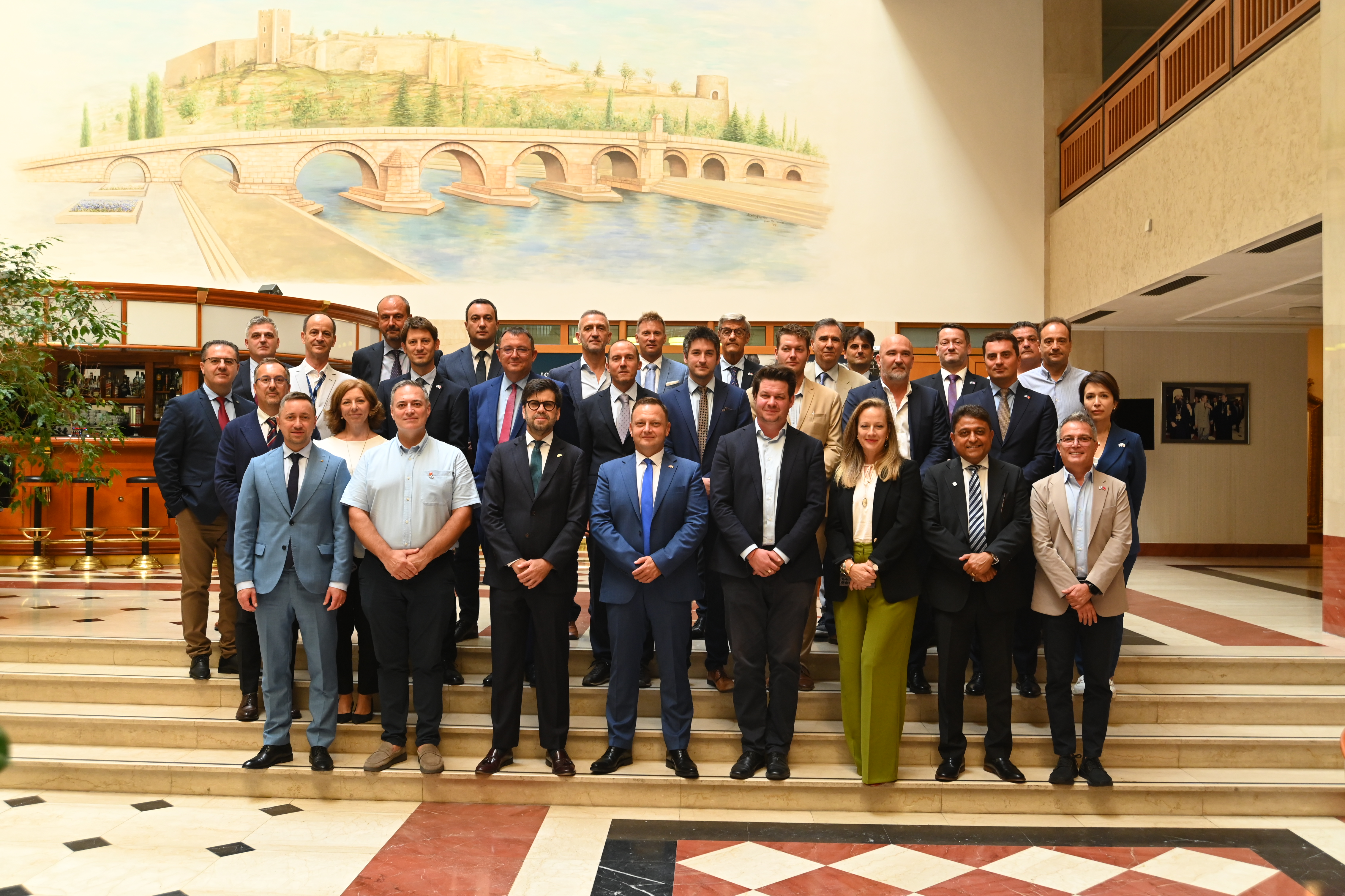
Representatives of the Civil Aviation Directorate of the Republic of Serbia took part in a two-day meeting of regional civil aviation authorities and EUROCONTROL management, held in Skopje on 31 August and 1 September.
The meeting, organised by the Civil Aviation Agency of North Macedonia and EUROCONTROL, focused on the exchange of experience, strengthening cooperation and current issues in the field of air navigation.
During the meeting, Serbia’s achievements to date and ongoing development activities were presented, with particular focus on EXPO 2027, the integration of eVTOL aircraft and unmanned aircraft, as well as the modernisation of air traffic control technical systems, which will contribute to increased capacity and safety at Belgrade Airport.
The meeting also highlighted the successful cooperation between the Civil Aviation Directorate and EUROCONTROL on the implementation of the U-space concept and the integration of unmanned aircraft detection systems, as important steps towards the further development and safe integration of new technologies into the airspace of the Republic of Serbia.
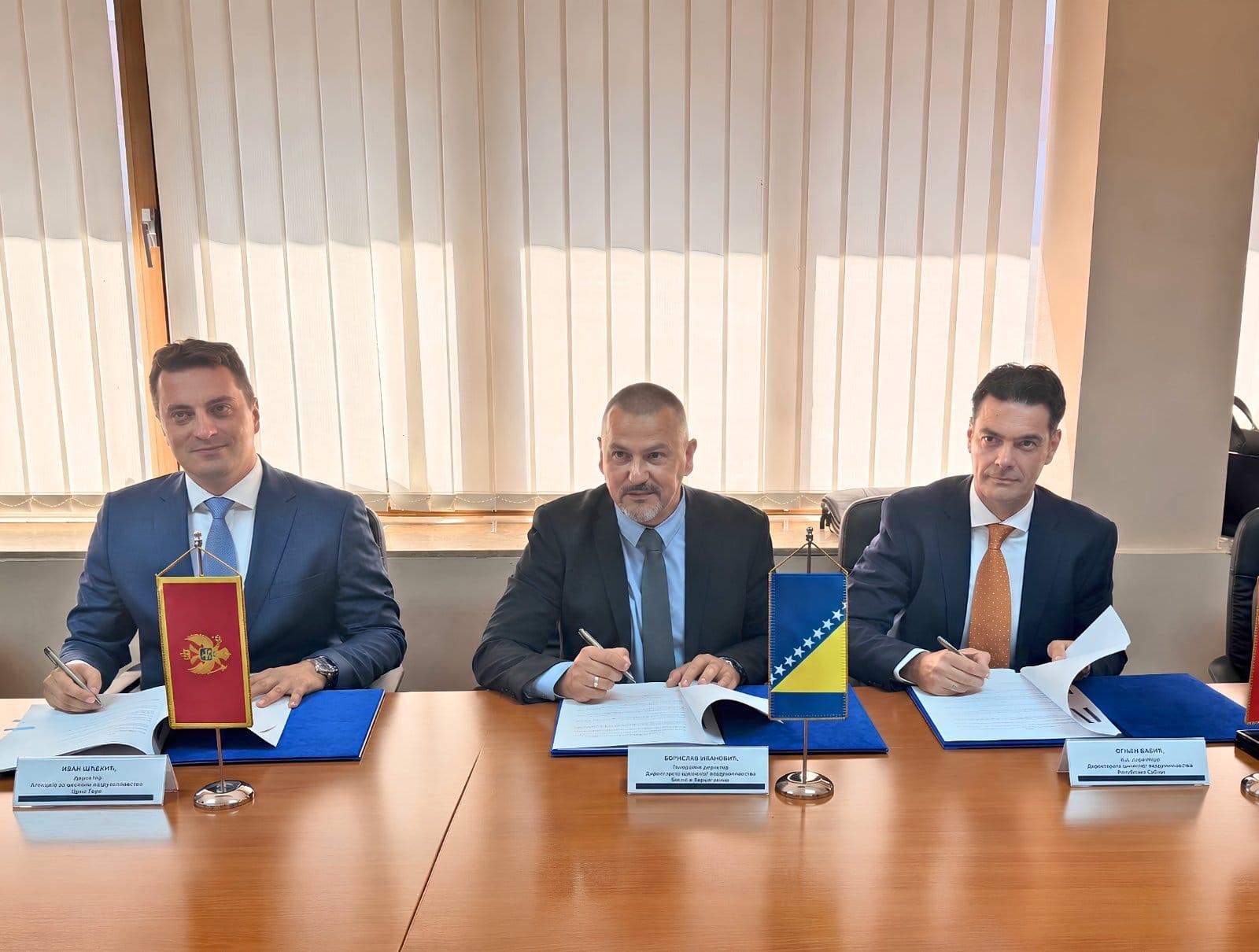
Acting Director General of the Civil Aviation Directorate of the Republic of Serbia, Ognjen Babic, signed a Coordination Agreement on 10 July 2026 in Banja Luka on behalf of the Directorate with the Bosnia and Herzegovina Directorate of Civil Aviation and the Civil Aviation Agency of Montenegro. The agreement was also signed by Zorislav Ivanovic, Director of the Bosnia and Herzegovina Directorate of Civil Aviation, and Ivan Scekic, Director of the Civil Aviation Agency of Montenegro, representing their respective institutions.
The agreement establishes a framework for coordination among the national supervisory authorities in overseeing the provision of Air Traffic Services (ATS) within the portion of airspace covered by the 2020 Agreement on the Transfer of Responsibilities for the Provision of Air Traffic Services.
It provides for the coordination of oversight activities, the exchange of safety-related information relevant to civil aviation, and cooperation in managing changes to the functional system for the provision of air traffic services.
The conclusion of this agreement further strengthens cooperation among the national supervisory authorities of Serbia, Bosnia and Herzegovina, and Montenegro, while enhancing the coordination of activities that contribute to the safety and efficiency of civil aviation across the region.