


Follow the link for new editions of the Airworthiness Department forms
We inform you that the call to the number for the payment of Republic administrative fees has been changed - you can view the form with the changes at линк
Owner/user or the operater of unmanned aircraft shall submit, as parties in the administrative procedure, request for approval of unmanned aircraft directly or through authorized respresentative
Follow the link for new editions of the Airworthiness Department forms
We inform you that the call to the number for the payment of Republic administrative fees has been changed - you can view the form with the changes at линк
Owner/user or the operater of unmanned aircraft shall submit, as parties in the administrative procedure, request for approval of unmanned aircraft directly or through authorized respresentative
Delegation of European Commission for air transport paid a working visit to the Civil Aviation Directorate of the Republic of Serbia from 27 to 29 September with an aim to review the progress in implementing the Multilateral Agreement on the European Common Aviation Area (ECAA Agreement).
The European Commission delegation included the representatives of the Directorate General for Mobility and Transport, Mr. Daniel Edwards and Ms. Cristina Vartsos, an expert for aviation regulations Mr. Frederik Sorensen, aviation safety expert Krasovsky Henry, aviation security expert Mr. Johan Van Der Brook, ATM expert Mr. Jean Marc Garo and representatives of the Delegation of the European Union to Serbia, Ms. Barbara Roces Fernandez and Mr.Dragan Lalic.
During the three-day visit to Belgrade the experts from Brussels met with representatives from Civil Aviation Directorate of the Republic of Serbia, Serbia and Montenegro Air Traffic Control Agency, "Nikola Tesla" Airport, Ministry of Infrastructure, Ministry of Foreign Affairs, Ministry of Economy and Regional Development, Ministry of Finance, Ministry of Trade and Services, the Ministry of Labour and Social Policy.
The European Commission Delegation for air transport met with representatives of domestic and foreign air carriers operating in Serbia.
EC experts were satisfied with the level of progress in implementing of the ECAA Agreement and with the overall status of the civil aviation in the Republic of Serbia. The details of this visit will be contained within the official report to be submitted by the end of the next month.
This is the fifth visit of EC experts to Serbia organized to mark the application of ECAA agreement.
As a reminder, the Agreement was signed on 29 June 2006 between the Republic of Serbia and the European Community, Western Balkan countries, Iceland and Norway. It was ratified by the National Assembly ratified on 13 May 2009.
The said Agreement provides for a full harmonization of national aviation legislation with that of European Community in the fields of aviation safety, security, air traffic management, airport management, protection of passengers and other users of services in air transport, liberalization of aviation market, banning of state aid and environmental protection.
The Civil Aviation Directorate of the Republic of Serbia is the coordinating body for the cooperation with the European Commission in order to properly implement the ECAA agreement.
The European Commission delegation included the representatives of the Directorate General for Mobility and Transport, Mr. Daniel Edwards and Ms. Cristina Vartsos, an expert for aviation regulations Mr. Frederik Sorensen, aviation safety expert Krasovsky Henry, aviation security expert Mr. Johan Van Der Brook, ATM expert Mr. Jean Marc Garo and representatives of the Delegation of the European Union to Serbia, Ms. Barbara Roces Fernandez and Mr.Dragan Lalic.
During the three-day visit to Belgrade the experts from Brussels met with representatives from Civil Aviation Directorate of the Republic of Serbia, Serbia and Montenegro Air Traffic Control Agency, "Nikola Tesla" Airport, Ministry of Infrastructure, Ministry of Foreign Affairs, Ministry of Economy and Regional Development, Ministry of Finance, Ministry of Trade and Services, the Ministry of Labour and Social Policy.
The European Commission Delegation for air transport met with representatives of domestic and foreign air carriers operating in Serbia.
EC experts were satisfied with the level of progress in implementing of the ECAA Agreement and with the overall status of the civil aviation in the Republic of Serbia. The details of this visit will be contained within the official report to be submitted by the end of the next month.
This is the fifth visit of EC experts to Serbia organized to mark the application of ECAA agreement.
As a reminder, the Agreement was signed on 29 June 2006 between the Republic of Serbia and the European Community, Western Balkan countries, Iceland and Norway. It was ratified by the National Assembly ratified on 13 May 2009.
The said Agreement provides for a full harmonization of national aviation legislation with that of European Community in the fields of aviation safety, security, air traffic management, airport management, protection of passengers and other users of services in air transport, liberalization of aviation market, banning of state aid and environmental protection.
The Civil Aviation Directorate of the Republic of Serbia is the coordinating body for the cooperation with the European Commission in order to properly implement the ECAA agreement.
Delegation of European Commission for air transport paid a working visit to the Civil Aviation Directorate of the Republic of Serbia from 27 to 29 September with an aim to review the progress in implementing the Multilateral Agreement on the European Common Aviation Area (ECAA Agreement).
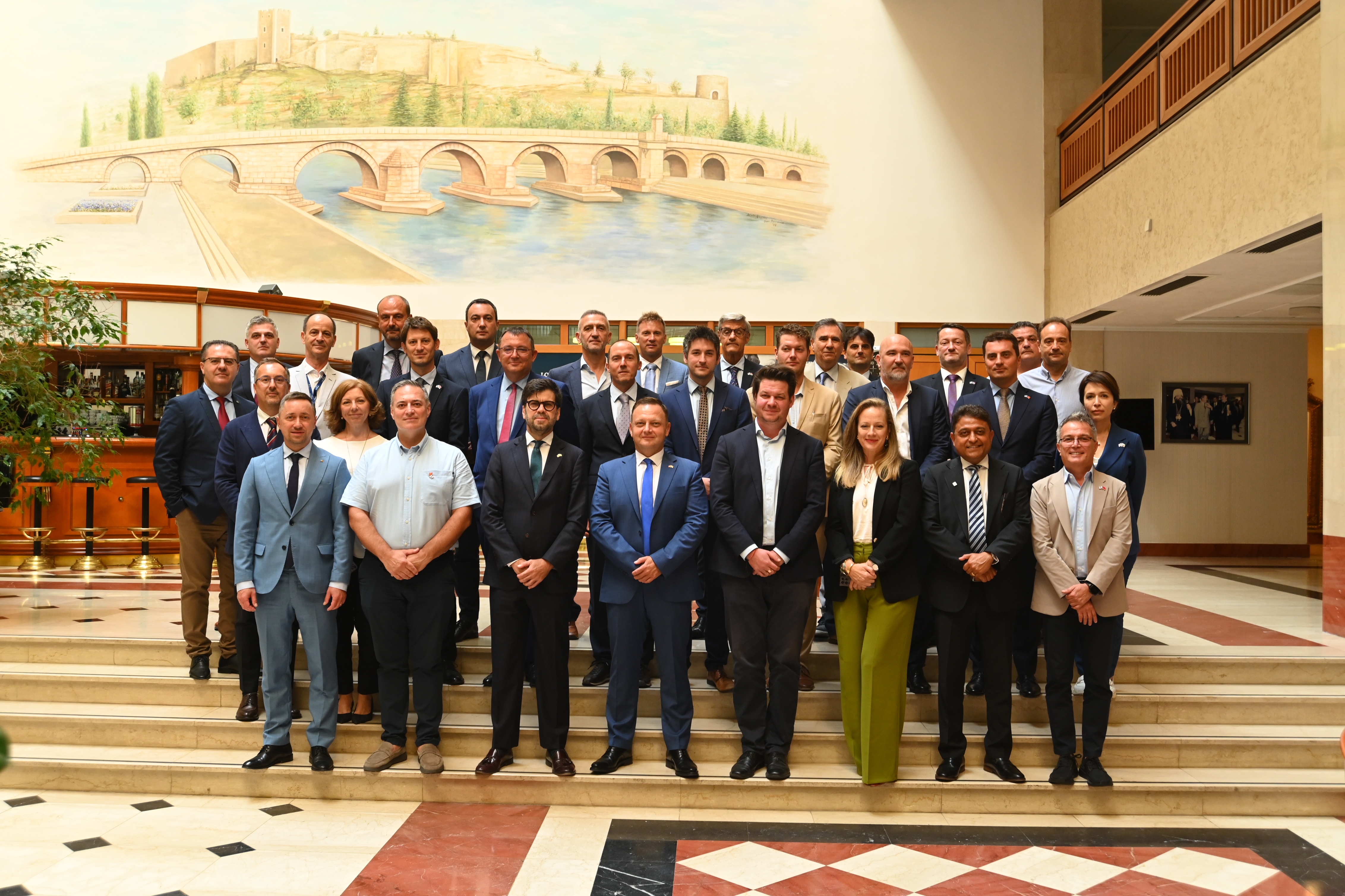
The Civil Aviation Directorate of the Republic of Serbia is hosting the annual Central Data Distribution Region (CDDR) meeting of the international Cospas-Sarsat programme, held from February 3 to 5, 2026, at the SMATSA Area Control Centre premises.
The international Cospas-Sarsat programme is a non-profit, intergovernmental organization that operates a global satellite system for detecting and locating activated distress radio beacons, forwarding this information to the relevant search and rescue coordination centres. Since its inception, the system has assisted in saving more than 50,000 lives worldwide.
The annual meeting in Belgrade has gathered representatives from CDDR member states, including France, the United Kingdom, Norway, Germany, Italy, Switzerland, Denmark, Sweden, Finland, the Netherlands, Poland, Greece, Turkey, Cyprus, and Tunisia, confirming the significance of the event and Serbia’s active role in the international search and rescue system.
The gathering was opened by the Director of the Directorate, Mirjana Čizmarov, who emphasized that hosting the meeting in Belgrade represents a token of recognition and trust, as well as a confirmation of the Directorate's capacity as the competent authority for the organization and coordination of the national search and rescue system. Following her remarks, David Poudevigne, Head of the French Mission Control Centre (MCC), addressed the participants, reminding them that Cospas-Sarsat is a living, dynamic network and that such meetings foster productive and substantive discussions.
During the three-day event, participants will have the opportunity to discuss operational and technical issues, exchange experiences, and harmonize activities aimed at further improving the efficiency of international cooperation in the field of search and rescue systems.
As part of the development of new technologies and air mobility concepts, Vertical Take-Off and Landing (VTOL) aircraft represent a new technological category that requires appropriate regulatory oversight.
Given the innovative nature of these aircraft and the specifics of their future operational use, the Civil Aviation Directorate of the Republic of Serbia is continuously and intensively working on preparing a suitable national regulatory framework. This process is based on the constant monitoring of European regulations, guidelines, and regulatory practices, as well as coordinated cooperation with all competent authorities and institutions at both national and international levels.
The European Union Aviation Safety Agency (EASA) is currently establishing a regulatory framework for VTOL aircraft, covering requirements for aircraft certification, operations, crew training, and integration into existing airspace.
To prepare for the introduction of VTOL aircraft, the Republic of Serbia has amended its air transport and pilot training rules by incorporating the relevant European Commission regulation into national legislation. This provides the legal framework for the operation of this type of aircraft.
Parallel to the adoption of the relevant regulations, communication has been established with VTOL aircraft manufacturers in order to become familiar with the certification requirements applied by the competent authorities in the countries where these aircraft are produced, considering that these involve new technologies and standards.
Additionally, the Directorate's inspectors have undergone specialized training by participating in international seminars and workshops, to enable them to effectively handle anticipated cases related to this type of aircraft.
These activities by the Directorate are conducted in accordance with international standards and recommended practices, to ensure the timely response of the Republic of Serbia to the challenges and opportunities arising from this new generation of aviation technologies.
To the Director of the Civil Aviation Directorate of the Republic of Serbia, Mirjana Čizmarov, on January 5, 2026, a recognition plaque was presented during the ceremonial Christmas concert marking the 35th anniversary of the successful operation of Prince Aviation.
The recognition plaque, awarded as an expression of gratitude for exceptional cooperation, trust, and long-standing partnership, was presented to Director Čizmarov by the co-founder of Prince Aviation, Slobodan Stričević, and the company’s director, Srđan Kragojević.
The awarded plaque represents a confirmation of the Directorate’s many years of dedicated work aimed at strengthening the civil aviation system, through continuous support and open dialogue with aviation entities across the territory of the Republic of Serbia.
The Civil Aviation Directorate of the Republic of Serbia announces that, from 1 January 2026, it will introduce systematic alcohol testing of flight and cabin crew, placing Serbia among the first countries in the region to implement this measure in full.
This measure enables the application of ARO.RAMP.106 under the Regulation on the Conditions for Air Operations, which incorporates Regulation (EU) No 965/2012 into national legislation. The legal basis for this measure is set out in recent amendments to the Air Transport Law (Official Gazette of the Republic of Serbia, No. 19/25).
Alcohol testing will apply to flight and cabin crew of both national and foreign operators using airports in the Republic of Serbia. Tests will be carried out by trained and authorised aviation inspectors in accordance with national law and ARO.RAMP.106.
Under the Air Transport Law, a zero-tolerance policy applies to alcohol among aircraft crew. Alcohol levels will be measured using certified and calibrated breath-alcohol testing devices suitable for evidentiary use.
Where a crew member refuses testing or returns a positive alcohol test, the inspector will temporarily prohibit the performance of the duties and inform the competent authorities.
Testing will normally be conducted on board the aircraft. Data on completed tests will be recorded in a centralised EASA database. All aviation stakeholders in Serbia, including EASA, have been informed of the introduction of this procedure.
Available data indicate that Serbia is among the first countries in the region to introduce alcohol testing of aircraft crew, strengthening aviation safety and consistency with European practice.
The Director of the Civil Aviation Directorate of the Republic of Serbia, Mirjana Čizmarov, participated on 11th December 2025 in the meeting of the members of the Founding Committee of JAA TO (Joint Aviation Authorities), held in Amsterdam.
During the meeting, which is traditionally held on an annual basis, the results achieved in the previous year, key challenges, and strategic directions for 2026 were discussed.